

Phytophthora? Anthracnose? Collar Rot? The Big Guide to Passion Fruit Diseases
In the 1980s, the passion fruit cultivation area in Taiwan once exceeded 1,200 hectares. However, due to the continuous spread of viral diseases, passion fruit yields decreased significantly, leading to a drop in cultivation area to just over 300 hectares. It was only after the introduction of a business model involving annual plant renewal and the popularization of disease-free passion fruit seedlings that the cultivation area began to gradually recover. This shows the significant impact of diseases on passion fruit. So, what are the common passion fruit diseases, and how can they be prevented and controlled? Let's dive in now.
I. Passion Fruit Disease Quick Look: Above-ground and Below-ground
Based on where symptoms occur, passion fruit diseases can be divided into those affecting the above-ground parts and those affecting the below-ground parts. Above-ground diseases include Phytophthora fruit rot, Anthracnose, and Brown spot. Below-ground diseases include Fusarium wilt and Collar rot.
Note: The photos below are from online sources; please do not use them without permission.
II. Phytophthora Fruit Rot (or Phytophthora Blight)
(A) Symptoms
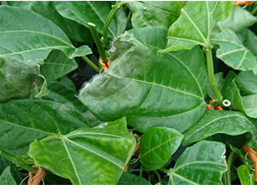
▶Leaves show water-soaked lesions, which later enlarge and turn dark brown.
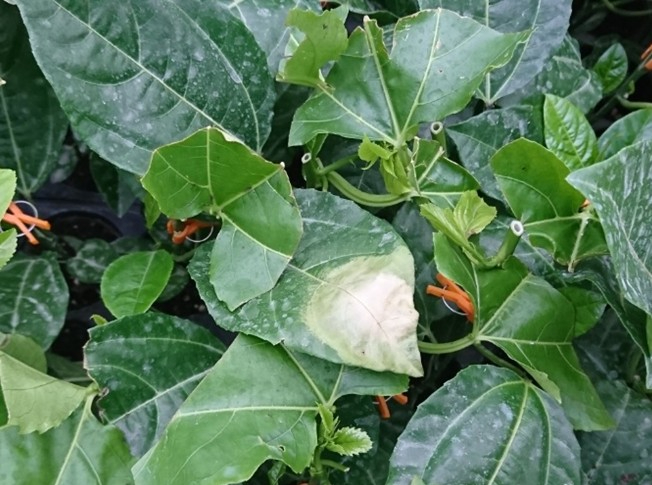
▶In high temperatures, white fungal growth (mold) appears around the lesions.
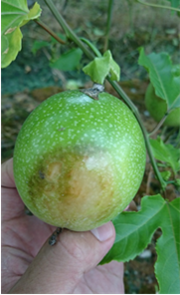
▶Fruits become water-soaked and soft, then rot and drop prematurely.
(B) Transmission Pathways
Fungal mycelium or spores survive in the soil and are released when humidity is high. It is typically spread by water and often occurs in summer and autumn when rainfall, humidity, and temperatures are high.
(C) Control Methods
1.Nursery Stage
▶Remove infected seedlings immediately to prevent pathogen splash during watering.
▶Control moisture to avoid excessively high humidity.
▶Implement routine fungicide spraying in the nursery.
2.Field Cultivation
▶Remove diseased tissues (leaves, fruits, etc.) from infected plants in the field to reduce infection sources.
▶Ensure good field drainage to prevent waterlogging, as pathogens spread via water flow.
▶Apply preventative fungicides before and after the rainy season (refer to the pesticide guidelines for passion fruit from the Animal and Plant Health Inspection Agency).
▶Practice balanced fertilization to enhance plant vigor and healthy growth.
III. Anthracnose
(A) Symptoms
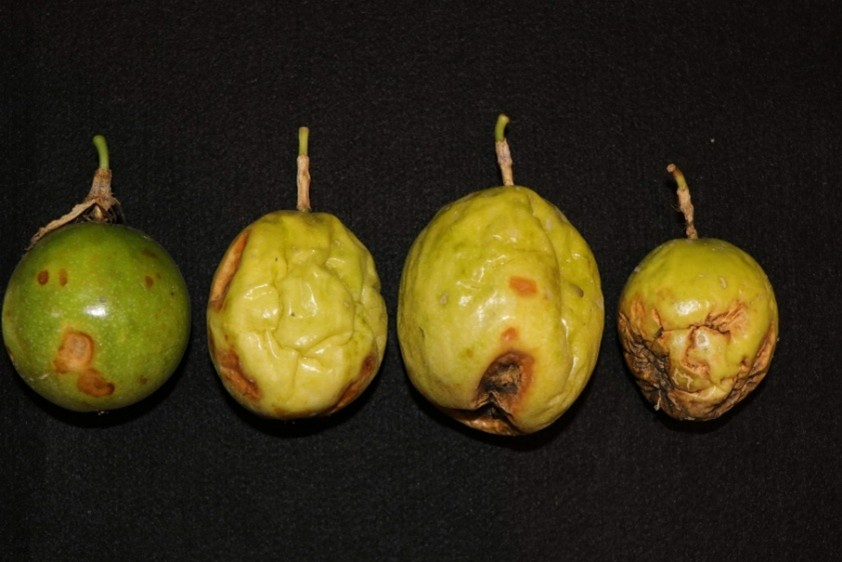
▶Early on leaves: Light green spots; later, leaves become aged, brittle, and tear easily.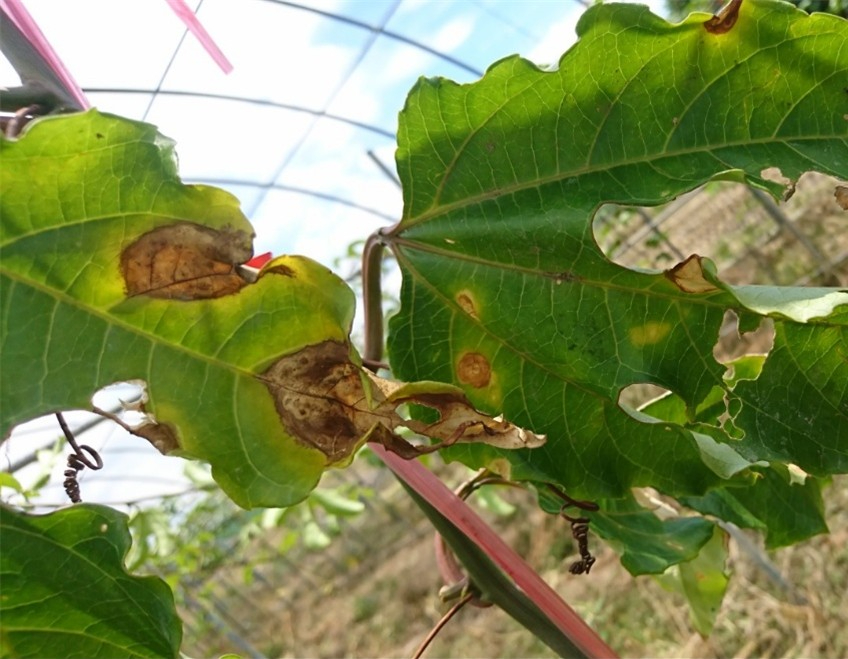
▶Early on fruits: Slightly sunken brown spots.
▶Mid-stage on fruits: Spots enlarge, turn light brown, and produce black granular structures (acervuli).
▶Late-stage on fruits: Spots expand further and coalesce into irregular patches.
(B) Transmission Pathways
Spread by wind and rain, commonly occurring during the rainy season and typhoon season (e.g., April to September).
(C) Control Methods
1.Nursery Stage
▶Control moisture to avoid high humidity, as high temperatures and humidity in greenhouses easily promote disease.
▶Implement routine fungicide spraying in the nursery.
2.Field Cultivation
▶Remove diseased tissues (leaves, fruits, etc.) from infected plants in the field to reduce infection sources.
▶Practice balanced fertilization to enhance plant vigor.
▶Since high temperature and humidity favor disease, ensure good field ventilation and adequate sunlight.
▶Apply preventative fungicides before and after the rainy season (refer to the pesticide guidelines for passion fruit from the Animal and Plant Health Inspection Agency).
IV. Brown Spot
(A) Symptoms
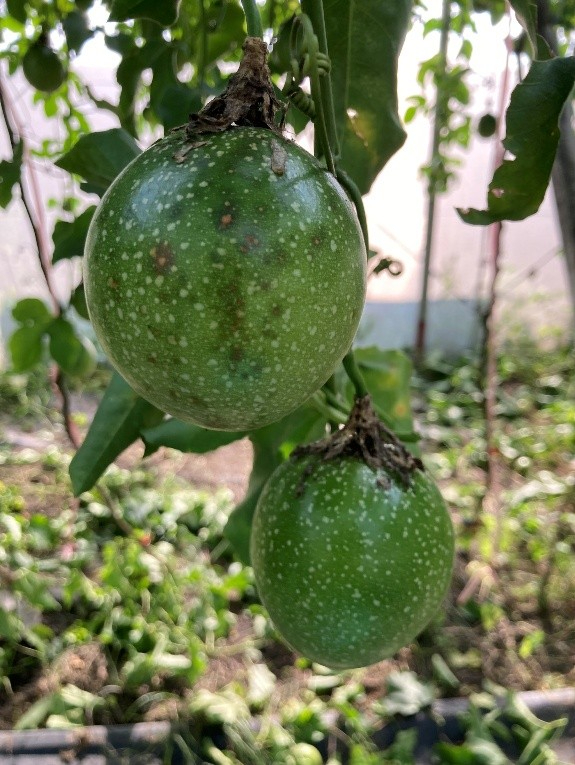
As the name suggests, circular brown spots appear on leaves and fruits, often surrounded by a yellow halo.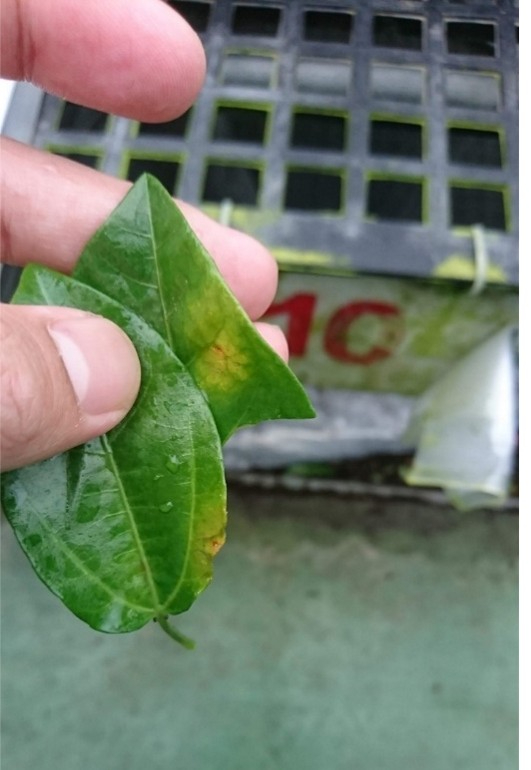
(B) Transmission Pathways
Primarily spread by air, and spores can also be dispersed through rain splash. Sporadic cases can appear in early spring, with infection risk increasing as humidity and temperature rise.
(C) Control Methods
1.Nursery Stage
▶Control moisture to avoid high humidity, as high temperatures and humidity in greenhouses easily promote disease.
▶Implement routine fungicide spraying in the nursery.
2.Field Cultivation (Similar treatment to Anthracnose)
▶Remove diseased tissues (leaves, fruits, etc.) from infected plants in the field to reduce infection sources.
▶Practice balanced fertilization to enhance plant vigor.
▶Since high temperature and humidity favor disease, ensure good field ventilation and adequate sunlight.
▶Apply preventative fungicides before and after the rainy season (refer to the pesticide guidelines for passion fruit from the Animal and Plant Health Inspection Agency).
V. Fusarium Wilt
(A) Symptoms
Affects both seedlings and mature plants. Infected seedlings wilt and die rapidly. In mature plants, symptoms often appear during the fruiting stage, with leaves yellowing and then wilting. It often occurs together with other symptoms.
(B) Transmission Pathways
The pathogen causing Fusarium wilt is soil-borne, making the soil the vector. It is more likely to occur in overly acidic soil or soil with poor drainage.
(C) Control Methods
▶Use healthy, disease-free seedlings.
▶Practice thorough field sanitation (removing all plant debris).
▶Disinfect the soil and maintain good drainage.
VI. Collar Rot
(A) Symptoms
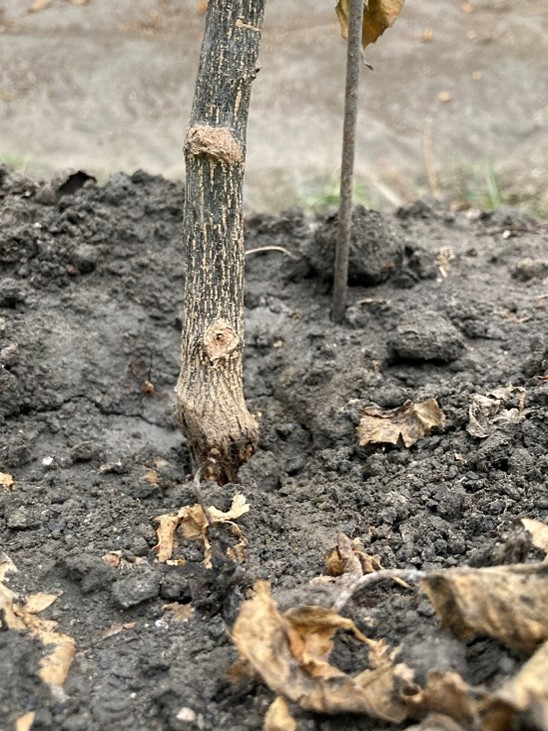
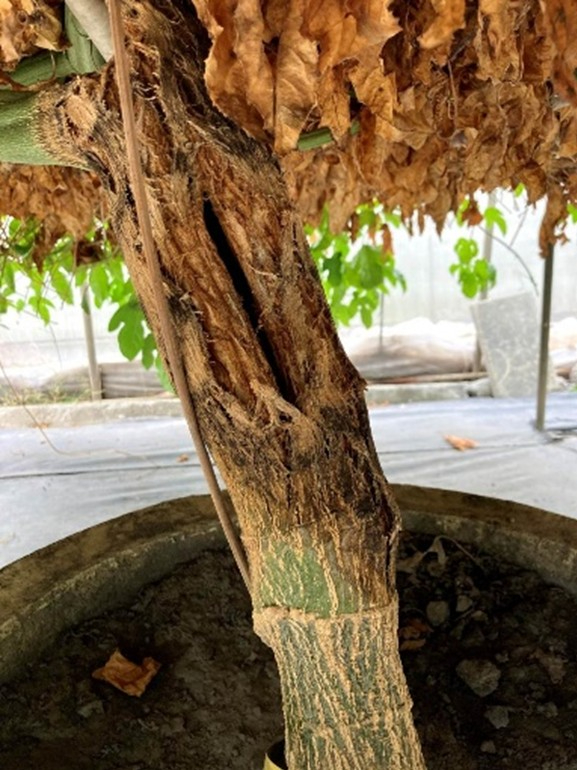
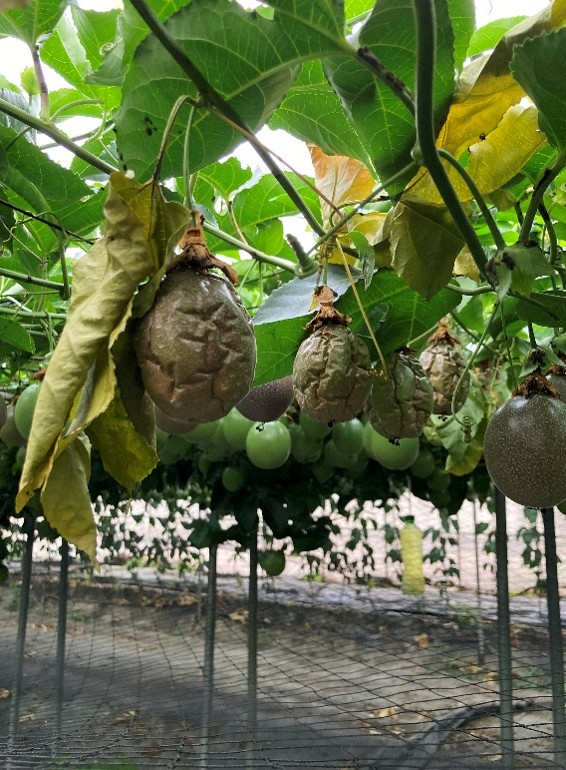
Occurs mainly at the base of the stem, near the soil line. Main symptoms include brown, cracked lesions on the stem. In severe cases, it can cause girdling (ring-like cracking), leading to wilting and death of the plant. In mature plants, damage to the vascular tissue affects nutrient transport to the fruits, resulting in poor appearance and flavor.
(B) Transmission Pathways
The pathogen is the same soil-borne fungus as Fusarium wilt, so attention must also be paid to soil pH and drainage.
(C) Control Methods
1.Nursery Stage
▶Control moisture to avoid excessively high soil humidity, as high temperatures and humidity in greenhouses easily promote disease.
▶Implement routine fungicide spraying in the nursery.
2.Field Cultivation
▶When transplanting, do not plant too deep; the top of the root ball should be level with the soil surface.
▶Ensure good field drainage to prevent waterlogging.
▶Remove diseased tissues from infected plants found in the field to reduce infection sources.
▶Avoid causing wounds to the roots and stem during field operations.
In the 1980s, the passion fruit cultivation area in Taiwan once exceeded 1,200 hectares. However, due to the continuous spread of viral diseases, passion fruit yields decreased significantly, leading to a drop in cultivation area to just over 300 hectares. It was only after the introduction of a business model involving annual plant renewal and the popularization of disease-free passion fruit seedlings that the cultivation area began to gradually recover. This shows the significant impact of diseases on passion fruit. So, what are the common passion fruit diseases, and how can they be prevented and controlled? Let's dive in now.
I. Passion Fruit Disease Quick Look: Above-ground and Below-ground
Based on where symptoms occur, passion fruit diseases can be divided into those affecting the above-ground parts and those affecting the below-ground parts. Above-ground diseases include Phytophthora fruit rot, Anthracnose, and Brown spot. Below-ground diseases include Fusarium wilt and Collar rot.
Note: The photos below are from online sources; please do not use them without permission.
II. Phytophthora Fruit Rot (or Phytophthora Blight)
(A) Symptoms
▶Leaves show water-soaked lesions, which later enlarge and turn dark brown.
▶In high temperatures, white fungal growth (mold) appears around the lesions.
▶Fruits become water-soaked and soft, then rot and drop prematurely.
(B) Transmission Pathways
Fungal mycelium or spores survive in the soil and are released when humidity is high. It is typically spread by water and often occurs in summer and autumn when rainfall, humidity, and temperatures are high.
(C) Control Methods
1.Nursery Stage
▶Remove infected seedlings immediately to prevent pathogen splash during watering.
▶Control moisture to avoid excessively high humidity.
▶Implement routine fungicide spraying in the nursery.
2.Field Cultivation
▶Remove diseased tissues (leaves, fruits, etc.) from infected plants in the field to reduce infection sources.
▶Ensure good field drainage to prevent waterlogging, as pathogens spread via water flow.
▶Apply preventative fungicides before and after the rainy season (refer to the pesticide guidelines for passion fruit from the Animal and Plant Health Inspection Agency).
▶Practice balanced fertilization to enhance plant vigor and healthy growth.
III. Anthracnose
(A) Symptoms
▶Early on leaves: Light green spots; later, leaves become aged, brittle, and tear easily.
▶Early on fruits: Slightly sunken brown spots.
▶Mid-stage on fruits: Spots enlarge, turn light brown, and produce black granular structures (acervuli).
▶Late-stage on fruits: Spots expand further and coalesce into irregular patches.
(B) Transmission Pathways
Spread by wind and rain, commonly occurring during the rainy season and typhoon season (e.g., April to September).
(C) Control Methods
1.Nursery Stage
▶Control moisture to avoid high humidity, as high temperatures and humidity in greenhouses easily promote disease.
▶Implement routine fungicide spraying in the nursery.
2.Field Cultivation
▶Remove diseased tissues (leaves, fruits, etc.) from infected plants in the field to reduce infection sources.
▶Practice balanced fertilization to enhance plant vigor.
▶Since high temperature and humidity favor disease, ensure good field ventilation and adequate sunlight.
▶Apply preventative fungicides before and after the rainy season (refer to the pesticide guidelines for passion fruit from the Animal and Plant Health Inspection Agency).
IV. Brown Spot
(A) Symptoms
As the name suggests, circular brown spots appear on leaves and fruits, often surrounded by a yellow halo.
(B) Transmission Pathways
Primarily spread by air, and spores can also be dispersed through rain splash. Sporadic cases can appear in early spring, with infection risk increasing as humidity and temperature rise.
(C) Control Methods
1.Nursery Stage
▶Control moisture to avoid high humidity, as high temperatures and humidity in greenhouses easily promote disease.
▶Implement routine fungicide spraying in the nursery.
2.Field Cultivation (Similar treatment to Anthracnose)
▶Remove diseased tissues (leaves, fruits, etc.) from infected plants in the field to reduce infection sources.
▶Practice balanced fertilization to enhance plant vigor.
▶Since high temperature and humidity favor disease, ensure good field ventilation and adequate sunlight.
▶Apply preventative fungicides before and after the rainy season (refer to the pesticide guidelines for passion fruit from the Animal and Plant Health Inspection Agency).
V. Fusarium Wilt
(A) Symptoms
Affects both seedlings and mature plants. Infected seedlings wilt and die rapidly. In mature plants, symptoms often appear during the fruiting stage, with leaves yellowing and then wilting. It often occurs together with other symptoms.
(B) Transmission Pathways
The pathogen causing Fusarium wilt is soil-borne, making the soil the vector. It is more likely to occur in overly acidic soil or soil with poor drainage.
(C) Control Methods
▶Use healthy, disease-free seedlings.
▶Practice thorough field sanitation (removing all plant debris).
▶Disinfect the soil and maintain good drainage.
VI. Collar Rot
(A) Symptoms
Occurs mainly at the base of the stem, near the soil line. Main symptoms include brown, cracked lesions on the stem. In severe cases, it can cause girdling (ring-like cracking), leading to wilting and death of the plant. In mature plants, damage to the vascular tissue affects nutrient transport to the fruits, resulting in poor appearance and flavor.
(B) Transmission Pathways
The pathogen is the same soil-borne fungus as Fusarium wilt, so attention must also be paid to soil pH and drainage.
(C) Control Methods
1.Nursery Stage
▶Control moisture to avoid excessively high soil humidity, as high temperatures and humidity in greenhouses easily promote disease.
▶Implement routine fungicide spraying in the nursery.
2.Field Cultivation
▶When transplanting, do not plant too deep; the top of the root ball should be level with the soil surface.
▶Ensure good field drainage to prevent waterlogging.
▶Remove diseased tissues from infected plants found in the field to reduce infection sources.
▶Avoid causing wounds to the roots and stem during field operations.
 Back
Back

